Fault Lines: Personality Quiz
A personality quiz that reads how you make hard choices and matches you to one of 122 characters from comics, Star Wars, Harry Potter, Lord of the Rings and video games. Upon completion you can see your reading and commentary on your thought pattern.
Online Quizzes
Online quizzes that match you to a fictional character are fun, and part of the appeal is that they tend to flatter you.
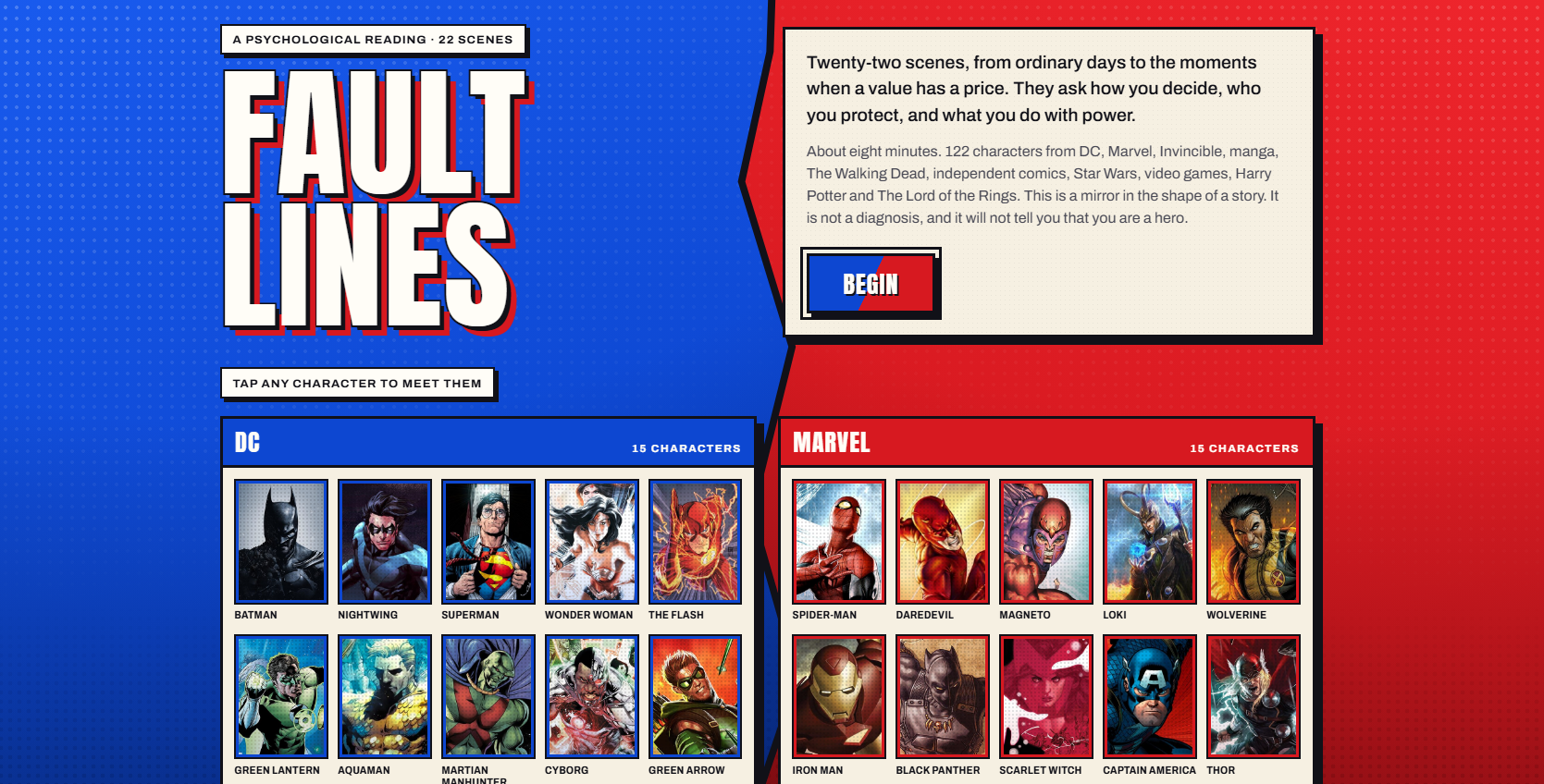
The problem is that they have no depth. Most are simple weighted tallies. Take a question like “What is your favorite animal?” with options Cat, Bat, Spider, Dog. Answer “Bat” and your Batman score goes up. Answer “Spider” and your Spider-Man score goes up. At the end, whichever character accumulated the most points is the one you get. There is no analysis of how you actually reason through a scenario.
Fault Lines
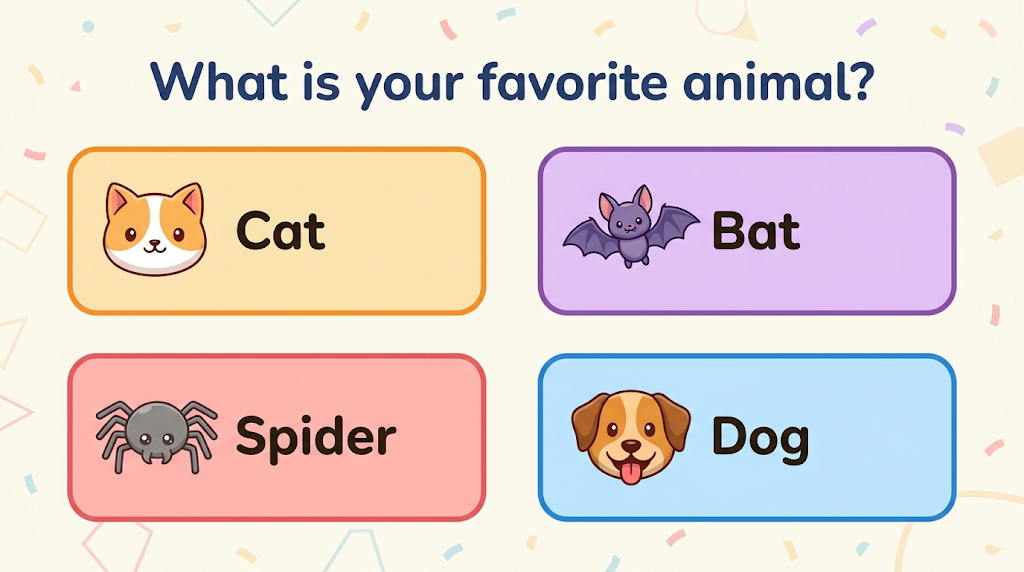
I wanted to compare the psychology of some of the most famous fictional characters and find out where a real person fits among them. Fault Lines is a 22-scene quiz about how you make hard choices. It matches you to one of 122 characters, then explains why:
Behind the scenes, each answer moves two or three of eight traits: Agency, Code, Bond, Control, Self, Harm, Power and Past. Applying the rule raises Code (rules come first) and Harm (you’ll hurt someone to keep it). Making the exception lowers Code but raises Power. Stepping aside lowers both Harm and Power.
Matching by shape, not by points
Your answers add up to a profile of eight numbers, each between -1 and 1. Every character has a profile too. Instead of counting points, Fault Lines compares the direction of the two profiles (cosine similarity), so what counts is the shape of how you decide, not how strongly you lean. Two people who both put rules ahead of people and keep their distance will land on the same character, even if one of them leans much harder.
Making it fair
Balance was the hardest part. In an early version, Iron Man won 25% of the time when I fed the quiz random answers. With 122 characters and only 22 questions, hand-written profiles collide. Two characters end up reached by the same answers, or one sits in the middle of everything and wins far too often.
To fix it, I wrote an optimizer that nudges every character’s profile while keeping it close to the psychology I wrote for them. It follows three rules:
- Everyone is reachable. Answering every scene the way a character would lands on that character, and no two characters share the same set of answers.
- Random answers spread out. Over thousands of random runs, every character wins between about 0.7x and 1.2x its fair share within its group.
- Nobody drifts out of character. A trait can move at most 0.4 from where I set it, and a strong trait can never flip sides.
These checks run as automated tests, so adding characters can’t quietly break the balance. One lesson along the way: my first balance numbers were wrong because a simple random number generator produced repeating patterns in its “random” answers. Switching to a better one (mulberry32) fixed them.
A reading, not just a label
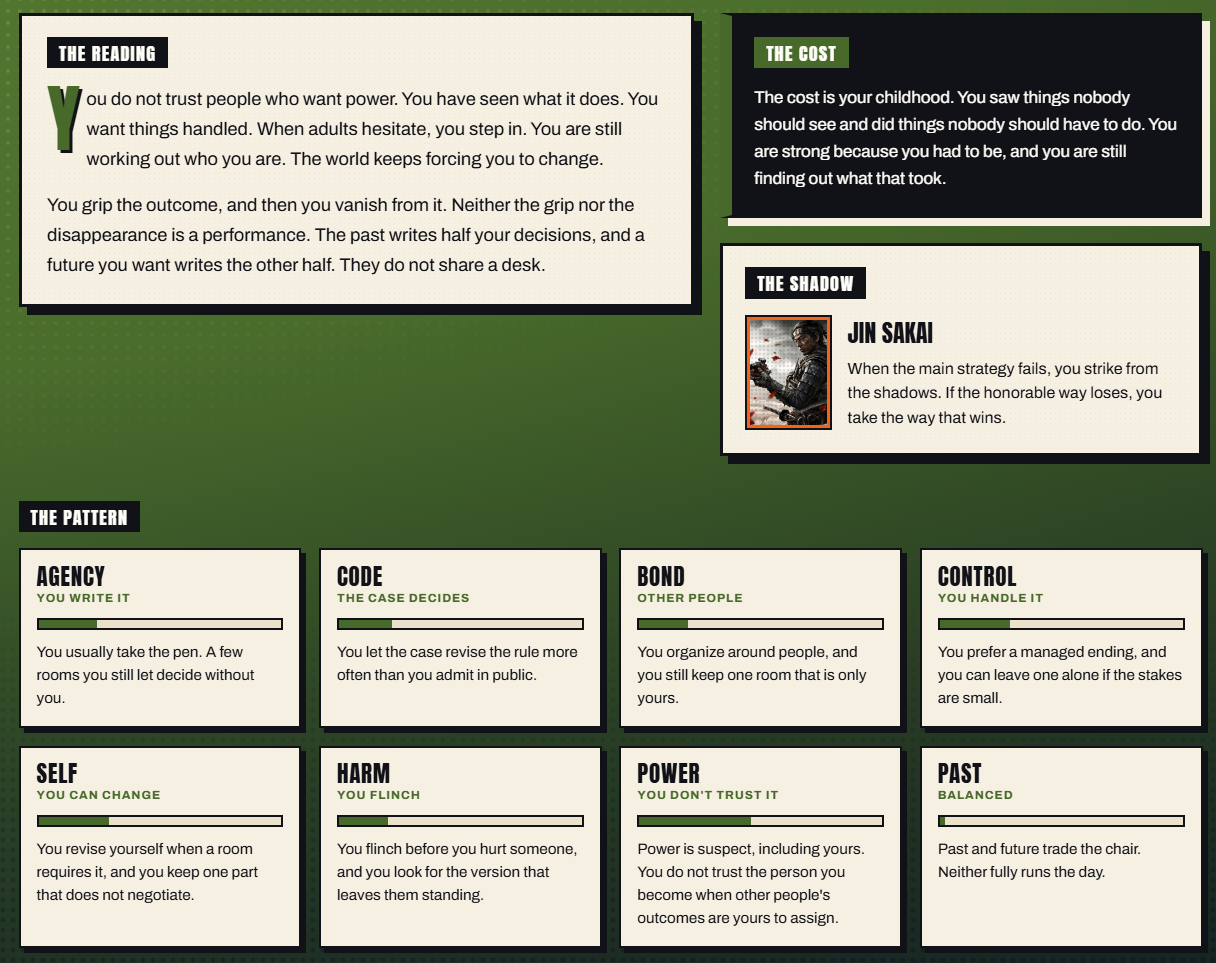
- The reading is built from your strongest traits, so two people who both get Batman can read differently: one reading leans on his past, the other on his code.
- Contradictions get called out. If you keep rules in some scenes and break them in others, the reading says so: “A rule is sacred until it is expensive, and then it becomes a suggestion.”
- The cost and the shadow. Each result explains what your pattern costs you. If a runner-up is close enough, it appears as your shadow, the pattern you fall back on when your main one fails.
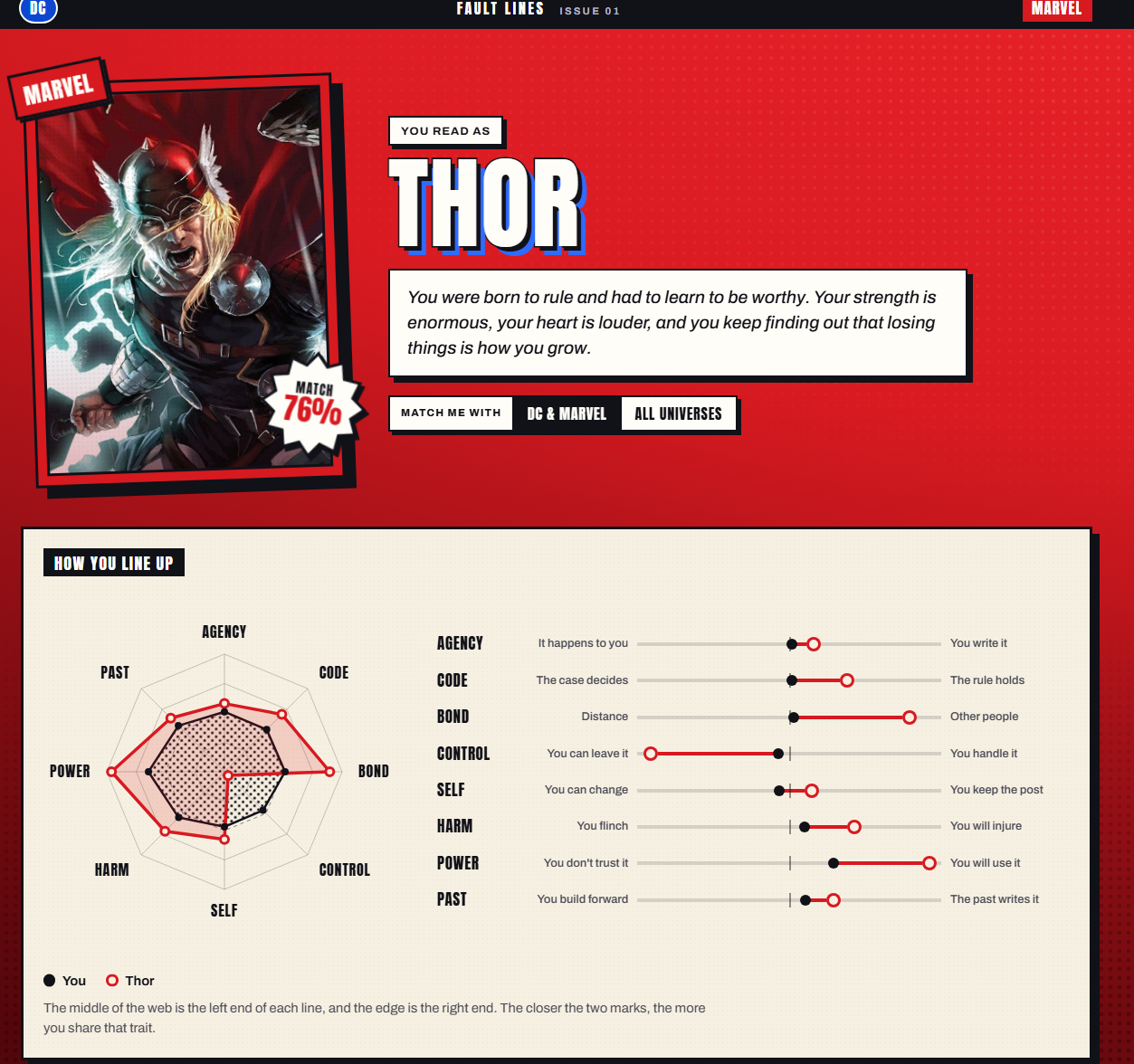
- A radar chart and trait lines compare you with your character, trait by trait.
- Alternate results show your top match in each of the other universes.
- You choose who to be matched with before you start: DC & Marvel, More comics, Movies & books, Video games or Everything.
- Character details stay hidden until you finish once, so they can’t steer your answers.
Reasoning Behind The Name:
In everyday language, politics, or sociology, a fault line means a hidden or underlying division, tension, or weak point in a group, organization, or peace agreement that could lead to a major crisis or conflict.